

More often than not, people will tell you to say goodbye to travel once you have a baby. The idea is that a baby needs so much care that there is no room for anything else. The truth is that a baby makes travel more complicated, not impossible. With a little extra planning, travelling with a baby can be one of the most rewarding trips you ever take.
This guide covers what to sort out before you book, how to choose a baby-friendly hotel, how to make the flight easier, how to feed your baby safely abroad, how to handle jet lag and how to plan your days once you arrive.
Originally published in December 2016. Updated by Team TDB in November 2026.
Before Travelling With a Baby: Documents and Health Checks
Your baby needs their own passport
For international travel, babies need their own passport, whatever their age. Depending on where you are going, they may also need their own visa. Passport applications for babies can take time, so start as early as you can, ideally before you book any non-refundable flights.
Travelling with only one parent? Carry a consent letter
If only one parent is travelling with the baby, some countries and airlines may ask for proof that the other parent agrees to the trip. This is more likely if you and your baby have different surnames. A signed consent letter from the other parent, with the baby’s passport details, your travel dates and contact details, along with a copy of the birth certificate, can save you a stressful conversation at immigration. Requirements vary by country, so check the rules for both the country you are leaving and the one you are visiting.
See your doctor well before the trip
Book an appointment with your paediatrician or family doctor six to twelve weeks before you travel. Ask about vaccinations, any health concerns at your destination and what to pack in a small medical kit. If your baby was born prematurely or has any health conditions, check with your doctor that they are ready to fly.
What to do if your baby is unwell while travelling
Before you leave, look up the nearest hospital or children’s clinic to each place you are staying, and save the local emergency number in your phone. Make sure your travel insurance covers your baby by name, as some policies do not add children automatically, and keep a copy of the policy with you. Taking a few minutes to do this before you leave can save you a great deal of worry later.
Where to Go and Stay When Travelling With a Baby
Start with fewer time zones
For a first trip, a destination with a shorter flight and a small time difference is far easier on everyone. Once you know how your baby copes with a flight and a new bed, you can plan longer journeys with more confidence.
How to choose a baby-friendly hotel
Many good hotels, and luxury hotels in particular, are well set up for babies, but it is always worth asking before you book. Check whether the hotel can provide a cot, a baby bath, a bottle steriliser or a kettle, and whether it offers babysitting or a kids’ club for when your little one is older. A room with a separate living area or a suite means one parent can relax while the baby sleeps. Also ask about anything that could be a safety concern, such as balconies, open staircases or an unfenced pool.
Rent bulky baby gear instead of flying with it
In many cities, you can rent cots, strollers, high chairs and car seats from local baby equipment rental companies, and some will deliver to your hotel. It can mean far less luggage, especially on a longer trip. Read reviews carefully and check the condition of anything you rent.
Flying With a Baby
How old does a baby have to be to fly?
There is no single minimum age for flying. Most airlines accept healthy, full-term babies from around one to two weeks old, but each airline sets its own rules, so check before you book.
Lap infant or a seat of their own?
Babies under two can usually travel on a parent’s lap. On international flights, this is rarely free. Many airlines charge a reduced infant fare, often around 10% of the adult fare, plus taxes. You can also buy your baby their own seat and use an airline-approved car seat, which some parents prefer on long flights. Policies vary, so read your airline’s rules carefully.
Ask for a bassinet early
Many airlines offer bassinets that attach to the wall at the front of a cabin section on long-haul flights. There are only a few on each plane, and each has size and weight limits, so request one as soon as you book.
Check the baggage allowance for your baby
Airlines differ on what a baby can bring. Some give lap infants their own checked bag, others only allow a stroller and car seat, and budget airlines may charge for extras. Check your airline’s infant baggage rules before you pack, so there are no surprises at check-in.
Baby food and milk at security
At most airports, baby food, formula and milk are allowed through security in more than the usual 100ml limit, in reasonable quantities for the journey, when you are travelling with your baby. Keep them easy to reach, as security staff may ask to check them. Rules differ from country to country, so check your departure airport’s guidance before you go. The UK government, for example, sets out its rules for baby food and baby milk clearly.
Make take-off and landing easier
Changes in cabin pressure can be uncomfortable for little ears. Many parents find that feeding their baby, or offering a dummy, during take-off and landing helps. Board with a change of clothes for the baby, and one for yourself too.
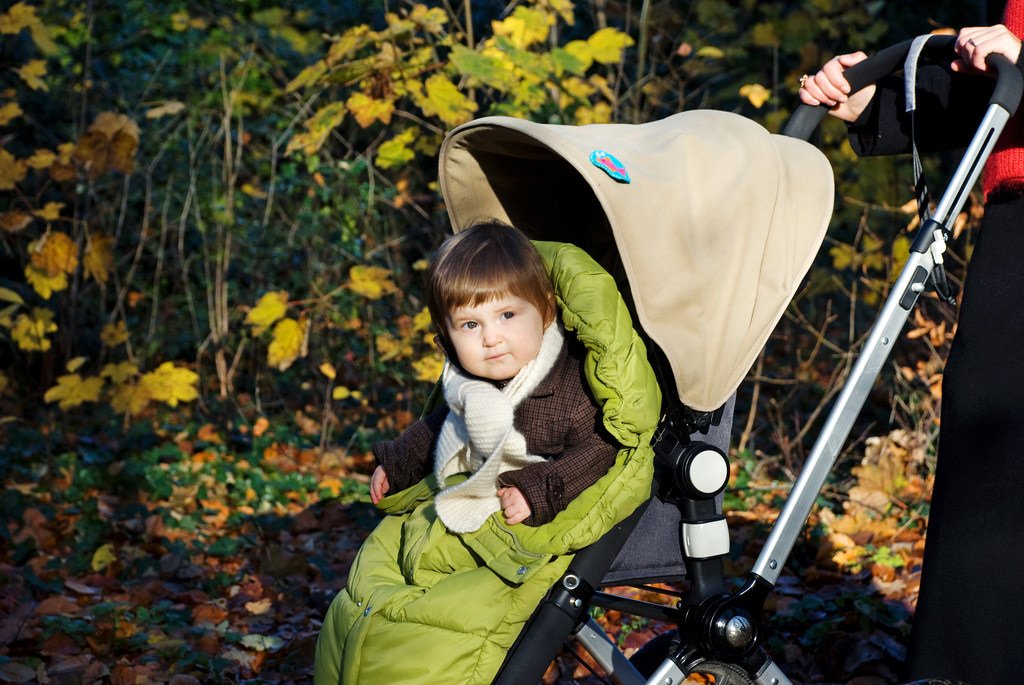
Image courtesy of Henry Scott via Flickr (CC BY-ND 2.0).
Find Sources for Everything Your Baby Needs
Looking after a baby means relying on a steady supply of nappies, wipes, formula, baby food and more. Before you leave, find out which stores near your accommodation sell these, and which brands they stock. If your baby is used to a particular formula or food, check whether it is sold at your destination. If not, pack enough for the whole trip, plus a few extra days in case of delays. Understanding what is in the formula and baby food you buy abroad makes shopping once you arrive far easier.
A simple packing list for travelling with a baby
- Passport and any visa, plus copies of travel insurance and bookings
- Enough nappies and wipes for the journey and the first day or two
- Formula, baby food, bottles and a small bottle brush
- A basic medical kit, as advised by your doctor
- Two changes of clothes in your hand luggage
- A light blanket or swaddle, and a favourite toy
- Sterilising tablets or travel sterilising bags if you bottle feed
- A copy of the birth certificate, and a consent letter if only one parent is travelling
- A baby carrier for airports and busy streets
- A compact stroller, which many airlines let you check at the gate
Getting Around When Travelling With a Baby
Taxis and ride-hailing cars in many countries do not have baby car seats, so plan your airport transfer before you arrive. You can bring your own car seat, rent one with a hire car, or ask your hotel to arrange a transfer with a car seat. For busy streets, old towns with cobblestones and places with lots of steps, a baby carrier is often easier than a stroller, and having both gives you options.
Feeding Your Baby Safely Abroad
If you are breastfeeding, travel is often simpler, as there is nothing to prepare or sterilise. If you are bottle feeding, bring your baby’s usual bottles, as the same brand may not be available where you are going. Tap water is not safe to drink everywhere, so for making up formula, many parents use bottled water. Some bottled waters are high in salt, so check the label and ask your doctor or health visitor which type is suitable for your baby. To keep bottles clean on the go, sterilising tablets or travel sterilising bags take up very little space. If your baby has started solids, pack a few familiar foods for the first couple of days while you find your way around local shops.
Helping Your Baby Adjust to Jet Lag
Babies feel jet lag too. Try to move your baby onto local time from the first day. Get outside in daylight during the day, keep evenings calm and dim, and follow your usual bedtime routine, whether that is a bath, a song or a favourite blanket. Familiar routines tell your baby it is time to sleep, even in a new room. Expect a few unsettled nights, and keep the first two or three days of the trip light.
Travelling With a Baby Takes Longer, So Plan for It
A baby will make things more complicated, but that does not make exploring a new country impossible. The trick is to build in extra time for doing nothing at all. Feeds, naps and nappy changes will take up part of every day, and regardless of how carefully you plan, your baby will change your plans at some point. Stay flexible and keep one main outing a day.
It also helps to understand local customs around babies in restaurants and public spaces, so you know what to expect.
There are plenty of ways to explore a new country with a baby. Parks, beaches, gardens, markets and easy coastal or nature walks all work well with a carrier or stroller, and they let you enjoy the destination at a gentle pace.
Travelling With a Baby: Frequently Asked Questions
What is the best age for travelling with a baby?
Many parents find the first months, before a baby starts crawling, the easiest time to travel, as babies sleep a lot and are easy to take everywhere in a carrier. The right time depends on your baby’s health and routine, so speak to your doctor first.
Does a newborn need a passport to travel abroad?
Yes. Babies need their own passport for international travel, whatever their age, and may need a visa depending on your destination.
Do I need a consent letter if only one parent is travelling with the baby?
You may. Some countries and airlines ask for written consent from the parent who is not travelling, particularly if surnames differ. Check the rules for your departure and destination countries before you go.
Do babies fly free?
Not usually on international flights. Babies under two travelling on a parent’s lap typically pay a reduced infant fare plus taxes. Check your airline’s policy before you book.
How do you keep a baby calm on a long flight?
Book a bassinet if you can, try to fly around your baby’s sleep times, feed during take-off and landing, and bring a few familiar toys. Above all, stay calm yourself, because babies pick up on it.
Read more: Travelling With Parents as an Adult: What It’s Really Like | Travel Accommodation on a Budget
Featured image credits: Alessandro Valli via Flickr.com under a Creative Commons Attribution 2.0 licence. Read the full legal code. Image 2 credits: Henry Scott via Flickr.com under a Creative Commons Attribution-NoDerivs 2.0 licence. Read the full legal code. No changes have been made to the original images.

The Daily Brunch editorial team, led by co-founder Anju Anna Alex, has written about luxury hotels, restaurants, chefs and travel across India and beyond since 2016, with stories told through the people behind them.