Spicy Dragon Fish Recipe
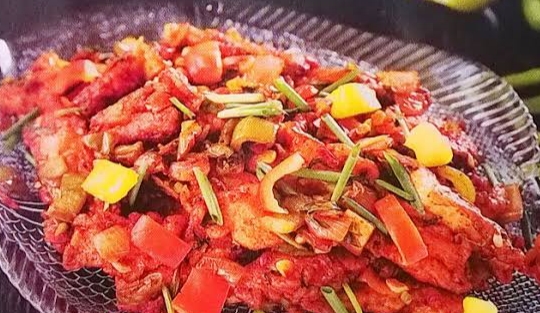
If you love the bold flavours of Indo-Chinese cuisine, you already know the cult favourite Dragon Chicken. Dragon Fish is the dish that takes the fusion even further. It is crispy, spicy, and coated in a glossy sauce that tastes like it came straight from a top restaurant kitchen. In this Daily Brunch exclusive, Super Chef Nandakumar shares his signature Dragon Fish recipe with clear steps that make it easy to recreate authentic restaurant-style flavours at home.
Ingredients for Spicy Dragon Fish
- Fish Fillet: 300 gms
- Med. Onions: 2 nos
- Capsicum: ½ no.
- Ginger-Garlic chopped: 40 gms
- Gr. Chilly chopped: 4 nos.
- Celery: 1 stalk
- Red Chilly Paste: 2 tbsp
- Tomato Sauce: 1 tbsp
- Tabasco Sauce: a few drops
- Soya Sauce: ½ tsp
- Salt & Pepper: To taste
- MSG 2 pinch
For Marinade:
- Corn starch: 2 tbsp
- Salt To taste
- Lime Juice
- Ginger-Garlic Paste 1 tsp
- Oil For frying
Method for preparing Dragon Fish
Slice fish fillets into 1” thickness. Wash well, marinate with salt, pepper, ginger-garlic paste, and lime juice. Place on a small tray and cover with cling foil and refrigerate. Keep for 20 minutes. Take out the fish from refrigerator, open and dust the fish with corn starch.
Heat oil in a wok and fry fish slices till crispy & brown. Remove from oil and place on a parchment paper
Heat oil in a wok, sauté the Chopped Ginger Garlic, Green Chilly, Onion, Capsicum & Celery till tender. Add sauces, sauté for 2 minutes , add fried fish, moisten with stock water.
Toss for 2 minutes, glaze with oil, serve hot in a Chinese bowl with spring onion as garnish.
Recipe Credits: Chef Nandakumar

Chef Nandakumar about food:
Words like perfect or yummy often appear when people want to express approval, but they are so broad that they barely communicate anything specific. Perfect can mean many different things depending on who says it, and yummy is simply another way of saying delicious. We understand the intention is positive, yet the meaning remains vague.
Some people go even further and try to trace the expression to the religious idea of transubstantiation, where bread and wine become the body and blood during Communion. This belief certainly creates a symbolic link between food and the body, but there is no real evidence that the everyday phrase grew out of that doctrine. The connection is more poetic than historical.
A more convincing explanation is that the phrase has its roots in ordinary eating, not in ritual worship. Throughout history, people have used food as a metaphor for pleasure, identity, and well-being. The way we eat, the choices we make, and the rituals we follow all become part of how we understand ourselves. Which is why the famous saying still holds true:You are what you eat.
It is far more likely that the phrase emerged from simple, daily experience at the supper table rather than from theological supplication. In other words, its origins are culinary, not spiritual, and its meaning endures because it speaks to something universal about how food shapes our lives and identities.

Chef Nandakumar Menon or ‘Chef Nandu as he is known evolved into the Super Chef series. He was at the CASINO HOTEL in Kochi and later at the remarkable COCONUT LAGOON in Kumarakom. Both iconic Hotels and restaurants of repute for the quality and consistency of food offered at their restaurants. Coconut Lagoon where Chef Nandu headed the kitchen moulded him to cater to international clientele from all over the world coming in to experience the magic of the backwaters of Kerala and Kerala itself as a unique destination.
From his early Catering Technology days at Adayar, Chennai and training at the famed TAJ MAHAL INTERCONTINENTAL HOTEL, Mumbai, Chef Nandu was back again at the Welcome Group’s ADAYAR PARK INN, Chennai.
Later he headed the setting up of the various F&B outlets of the ABAD PLAZA group, Kochi as its Corporate Chef.
And then with the Quilon Beach hotels, Chef Nandu created a redefined art of culinary expertise. His clientele were Doctors, Cashew businessmen and of course celebrities from the tinsel world, the cloyed connoisseurs had a different feel with his nouvelle cuisine.
He still loves to cook and share his valuable experience of the world of food with The Daily Brunch and its readers in our series on SUPER CHEFS.
Cheers!