
Lessons from the Greatest Orators in History: How to Speak with Power and Purpose
The most powerful speeches in history were not spontaneous. They followed repeatable techniques that still work today. This article breaks down exactly how history’s greatest orators did it—and how you can apply those techniques now.
Public speaking has shaped the course of history, and the world’s greatest speeches were never accidents. They were crafted with intention, technique, and passion. The ancient Roman philosopher Cicero believed that every powerful speech—and every great orator—rests on three pillars: technique, substance, and emotion. When we study legendary orators such as Demosthenes, Winston Churchill, Martin Luther King Jr., John F. Kennedy, Abraham Lincoln, Theodore Roosevelt, and even controversial figures like Adolf Hitler, we see his insight come alive. These speakers delivered their messages with knowledge, conviction, and purpose, using carefully chosen words, disciplined practice, and strategic body language to influence events and move audiences.
Great lessons in public speaking can be learned by examining how these master orators prepared, rehearsed, and spoke. Their ability to modulate their voice, command the stage, articulate ideas clearly, and create emotional connection made their speeches unforgettable. Whether it was overcoming physical limitations, refining vocal rhythm, or developing persuasive storytelling techniques, each orator followed a deliberate path to excellence.
This article distills the most powerful public speaking lessons from history’s greatest orators, offering practical insights that will help any aspiring speaker—or future orator—build confidence, improve delivery, and communicate with clarity and impact.
What the World’s Greatest Orators Teach Us About Public Speaking
Demosthenes
Demosthenes was the greatest orator of ancient Greece and is regarded as a great master in oratory in history. His life story is highly inspiring to everyone who is aspiring to become an orator. His childhood was extremely pathetic and miserable. He was brought up by women in the family since his father was far away from home. He did not get the love, affection, and care of his parents as other children of his age. He became extremely lonely and isolated and hence he found solace in the world of books.
He was very pale, unhealthy and feeble. He was worried about his stammering. Yet, his greatest desire was to become an orator and he took a firm decision to overcome his defects at any cost. He started to work hard for fulfilling his desire. He regularly went to the seashore and spoke to the waves loudly, after putting pebbles in his mouth. He used to run up to the hills and down the valleys, speaking or singing to his maximum voice. He wanted to overcome his tiredness and difficulty in speaking loudly and fluently at difficult situations.
Gradually he gained the confidence to face people and to speak fluently. He dared to test his ability acquired so far by presenting a civil case of his father in the court. That was the first opportunity he got to express his talents in speaking to a group of learned people and that was a great success. Gradually, he gained confidence in public speaking and used every opportunity he got to speak. From a weak stammering boy he transformed himself to the greatest orator of ancient Greece.
Demosthenes leaves us a message that if you have a strong passion for becoming an orator, nothing can prevent you from that. You can overcome your shortcomings and fear for public speaking by consistent hard work and regular practice.
Winston Churchill
“Of all the talents bestowed upon men, none is as precious as the gift of oratory. He who enjoys it wields a power more durable than that of a great king”. These words of Winston Churchill clearly indicate how ambitious he was to become the master of the spoken word. Throughout his life, he tried his best to sharpen his talents in the art and craft of public speaking.
Churchill used some classical techniques to make his speeches powerful and memorable. He used to choose his words with utmost care to infuse his speech with a beautiful musical rhythm and resonance. He wrote his speeches and even practiced in front of a mirror before appearing in the British Parliament. He was very careful, about his body postures and gestures and facial expressions. He spoke with simplicity and clarity using lucid language but used some rhetorical techniques to make his speeches inspirational and unique.
Adolf Hitler
Adolf Hitler was born with a gift of gab and is considered as one of the most powerful and effective speakers in history. It was his oratory skill and its excellence that helped Hitler rise to power. His powerful speeches persuaded millions to accept his ideas and stand enthused to follow him. His aggressive style and body language inspired, activated and electrified the audience.
Hitler actually acquired his oratory skills by consistent efforts and practice. In his earlier days, he got a chance to speak to the customers in a bar and beer garden. He used some special techniques to get the attention of the customers who were fully engaged in drinking alcohol. With the help of a photographer, he analyzed and evaluated his different gestures and body positions during his speech. Before becoming the chancellor of Germany itself, he had become a powerful orator.
Hitler believed that powerful public speaking is the most important recipe to change the world. He wrote all speeches himself and edited it several times improvising each time. Hitler used to rehearse his delivery with hand gestures in front of a mirror. He also practiced several breathing exercises for improving his oratory.
Hitler’s speeches were highly dramatic and emotional so that they animated and moved the people as he intended.
John F. Kennedy
John F. Kennedy is regarded as one of the most powerful public speakers in recent history. He used to prepare important speeches well in advance. He used keywords selectively for impressing and inspiring his audience. His youthful handsome appearance and energetic body language was an added advantage for him to impress the people.
It was from 1960, the U.S. presidential debates were shown in TV channels. The open debate between the then presidential candidates Kennedy and Nixon was keenly watched by a great number of people on TV and they were impressed by the performance of Kennedy and opted to vote for him. The people who heard the debate through radio opined and predicted that Nixon will win. The victory of Kennedy as the 35th president of U.S.A proved that the visual effect is a determining factor in the success in public debates and speeches.
Kennedy was very much interested in improving and brushing up his oratory skills. He developed strategies for the speeches by adopting attractive and powerful techniques of the great orators of history. He was a true fan of Abraham Lincoln and found time to read through many of his famous speeches. He was trying to visualize how those words impacted a great lot of people. Kennedy was also careful about choosing the most suitable words to create a sense of community and trust in the people. He truly believed that it is not what you say but how you say is more important for the success in public speaking.
Martin Luther King Jr.
Martin Luther King Jr. is generally accepted as an icon of oratory in history. His, “I have a dream…..” speech became the most famous and enduring speech of all times. A number of great lessons of oratory can be learned from this master speaker.
King’s experience as a Baptist preacher gave him the skill of the classical use of prose rhythm. He made his speeches enduring and powerful by focusing on important moral issues.
King spoke to the hearts of people; his words appealed to their imagination and not just to the intellect. If you carefully watch his speech videos, you can see that he used the phrase ‘I have a dream’ 12 times during his speech. His mesmerizing tone and rhythm made the feeling that he was not simply speaking but, singing the lines of poetry. He modulated his voice by speaking from the diaphragm, instead of the throat. He spoke in slow pitch with radiating confidence and used silence or pauses to make his point memorable.
Martin Luther King Jr. drew inspiration from Shakespeare, the Bible, and numerous civil rights thinkers, in writing his “I have dream” speech. He spent a lot of time to write and rewrite, to edit and re-edit the speech to make it more powerful and motivational.
Learn the Lessons
There are many other great speakers in history like Abraham Lincoln, Theodor Roosevelt, Nelson Mandela, Swami Vivekananda, Barak Obama, and Bill Clinton who have become the masters of the spoken word. We can very well draw inspiration from all these orators and learn the lessons of the art of oratory.
If you want to become a great speaker, the most important thing is to have a strong passion for public speaking and the will to overcome your limitation. You can watch the videos of great speakers and analyze and adopt the strategies and the techniques they actually used to make their speeches unique and memorable. Always focus on the three Ps, prepare, practice and perform. Ultimately, powerful speaking is an artistic performance. As the great American philosopher and poet Ralph Waldo Emerson pointed out; “Speech is power; speech is to persuade, to convert, to compel”.
Image Credits: www.pixabay.com
Frequently Asked Questions:
1. What makes someone a great orator?
A great orator combines strong technique, compelling content, and emotional connection with the audience. Effective orators use clear structure, intentional pauses, confident body language, and persuasive storytelling to deliver memorable speeches.
2. How did famous speakers like Churchill and Martin Luther King Jr. improve their speaking skills?
They refined their speaking abilities through years of practice—writing their speeches, rehearsing aloud, studying past masters, improving vocal modulation, and consistently analyzing their performance. Their success came from deliberate preparation rather than talent alone.
3. Can anyone become a good public speaker?
Yes. Many legendary orators, including Demosthenes, started with serious challenges like stammering or lack of confidence. With consistent practice, effective techniques, and the willingness to improve, anyone can develop strong public speaking skills.
4. What are the most important techniques in public speaking?
Essential techniques include voice modulation, clear articulation, controlled pacing, strategic pauses, storytelling, emotional appeal, and engaging body language. Preparing thoroughly and knowing your audience also play a major role.
5. Why are historical speeches still studied today?
Great speeches shaped governments, inspired social movements, and changed national narratives. They are studied to understand persuasive techniques, leadership styles, rhetorical devices, and the power of effective communication.
6. What did Cicero believe about powerful speeches?
Cicero believed that every great speech must include three core elements: technique, substance, and emotion. This framework continues to guide modern public speaking and remains foundational for aspiring orators.
7. How do orators like John F. Kennedy and Abraham Lincoln choose their words?
They chose words carefully to create a sense of unity, trust, and emotional resonance. Their speeches used simple but powerful language, strategic repetition, and strong imagery to leave a lasting impact.
8. Why is body language important in public speaking?
Body language influences how the audience perceives the speaker. Confident posture, intentional gestures, eye contact, and expressive facial cues make the message more persuasive and help maintain audience engagement.
9. What can modern speakers learn from Adolf Hitler’s oratory (purely from a technical standpoint)?
From a technical perspective—not ideological—he demonstrated the impact of vocal control, deliberate pacing, emotional build-up, and consistent rehearsal. His example also serves as a reminder of the ethical responsibility that comes with persuasive power.
10. How can I start improving my public speaking skills today?
Begin by practicing short speeches aloud, recording yourself, studying great speeches, focusing on breathing techniques, and gradually speaking in front of small groups. Consistency and reflection are key to becoming a confident orator.
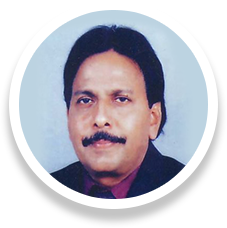
He is a Human Resource Consultant, National Trainer, and Counselor. Formerly he was the Deputy Chief Engineer, Kerala State Electricity Board and is still working as an external faculty of HRD Programmes of KSEB. He is also a faculty of Department of Management Studies, Mar Augusthinose College, Ramapuram, under M.G.University, Kerala. He is the PG course co-ordinator of MHRM.
He is a columnist in several Magazines, like ‘Business Deepika’, ‘Creative Business’, ‘Donbosco’ etc. His articles have been published in many magazines and journals. His several speeches have been aired by All India Radio. His interviews on various subjects have been telecasted by Power Vision TV.
He is the author of five best-selling books
- ‘Stress-Manassasthra- Aathmeeya Pariharangel’. (Current Books, Thrissur) 4th Edition
- Vijayiyude Vyakthithwam (Current Books, Thrissur)
- Jeevitham Santhushtamakan, Nithya Yauvanam Nedan.(CSS, Thiruvalla)2ndEdition
- Emotional Intelligence-Jeevithavijayathinu (CSS, Thiruvalla)
- Vijayarahsyangal (Current Books, Thrissur)
As a trainer, he has conducted more than a thousand seminars and workshops for teachers, parents, students, executives and others, on several subjects like Stress Management, Time Management, Personality Development, Emotional Intelligence and Spiritual intelligence for Excellence, Communicative Skills, Assertiveness, Motivation, Study Skills, Effective Parenting, Counselling Skills etc. He is an external training faculty of Power Engineers Training and Research Centre of KSEB. He is an external faculty of IMG Cochin. He is also the Secretary of Upasana Cultural Centre, Thodupuzha.