
The Smithsonian’s National Air and Space Museum in Washington, DC, has reached the end of a transformation that began in 2018. With the opening of its final two galleries this autumn, visitors can once again explore the entire museum on the National Mall, now with all 20 of its galleries redesigned.
“We are thrilled to complete the most extensive project the museum has ever undergone,” said Chris Browne, the museum’s John and Adrienne Mars Director. “With the opening of these last two galleries, the public will once again be able to visit the entirety of the museum and learn from and engage with the nation’s world-class aerospace collection.”
At Home in Space
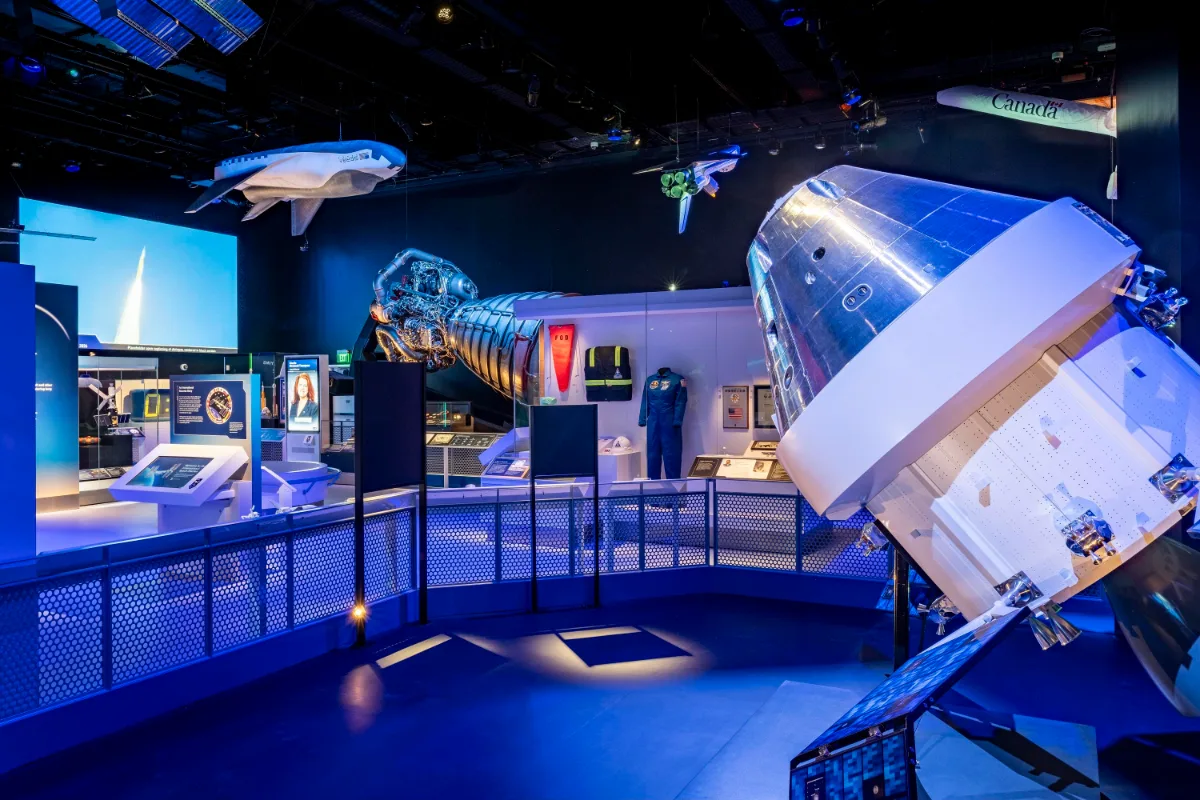
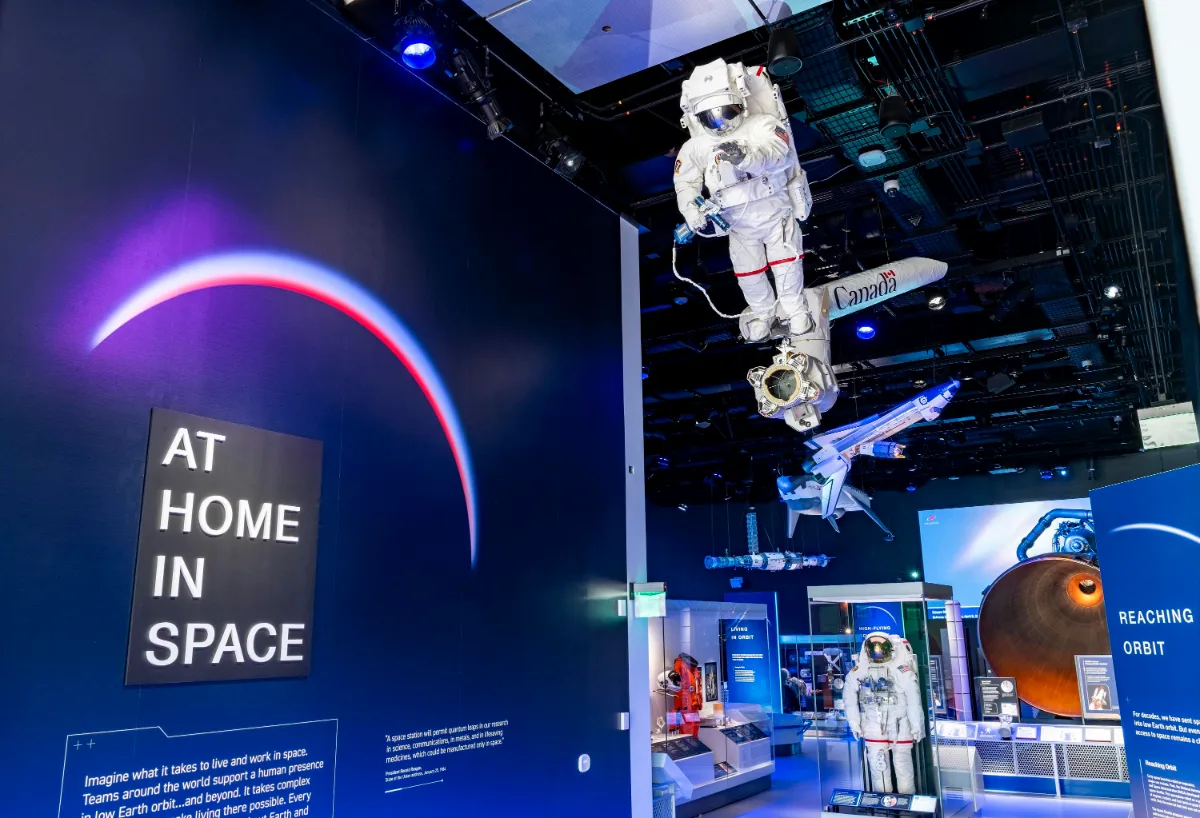
Opening on Friday, 30 October, At Home in Space is the more hands-on of the two new galleries. It follows more than 50 years of learning how people can live and work in space, and how they might travel beyond Earth’s orbit. Among its highlights are a space shuttle main engine, a flown spacesuit used for spacewalks, Robonaut 1A (an experimental humanoid robot), and the in-flight suits worn by astronauts Guy Bluford and Sally Ride.
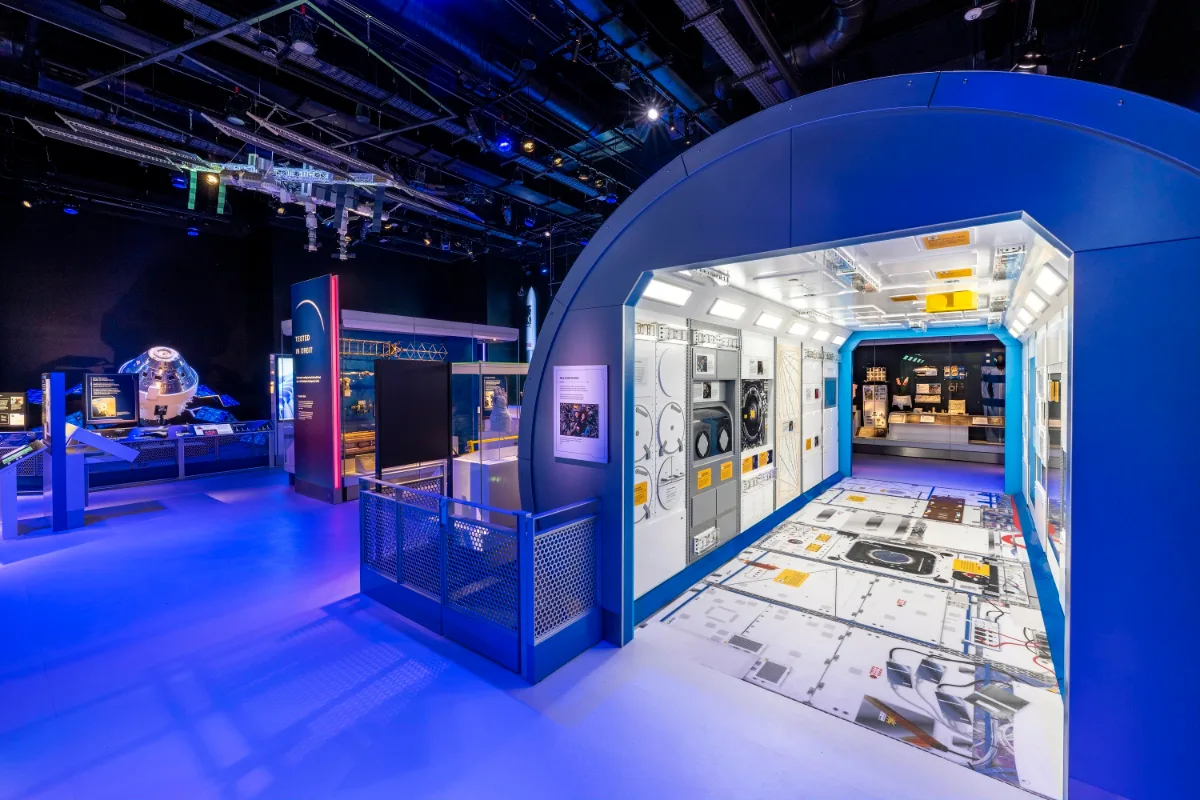
Visitors can step inside a mock-up of the Destiny module, the US laboratory on the International Space Station, and look at everyday objects adapted for life in orbit, from tools for sequencing DNA to coffee cups designed for microgravity. There is also an interactive Spaceflight Academy Quiz, where visitors can test their knowledge against one another.
Modern Military Aviation
The second gallery, Modern Military Aviation, opens on Wednesday, 11 November. It traces how aviation technology has changed from the Cold War to the present day, with a focus on the people behind the technology. Aircraft on display include the North American F-86 Sabre, the Bell UH-1H “Huey” helicopter and the General Atomics MQ-1L Predator.
Seven years in the making
Beyond the galleries, the renovation replaced the building’s exterior cladding, updated its mechanical systems and refreshed the visitor experience. The first half of the renovated museum opened in October 2022, with eight new or reimagined galleries, the Northrop Grumman Planetarium, the museum store and the Mars Café. Five more galleries followed in July 2025, and another five opened on 1 July this year.
The completion also falls in the museum’s 50th anniversary year, which is being marked with film screenings, lectures, special merchandise and digital programmes.
Plan your visit
The National Air and Space Museum is at 650 Jefferson Drive SW, Washington, DC, and is open every day except 25 December, from 10 am to 5:30 pm. Admission is free, but timed-entry passes are required.
Aviation fans can also visit the museum’s Steven F. Udvar-Hazy Center in Chantilly, Virginia, near Washington Dulles International Airport. It keeps the same hours, admission is free and no timed-entry pass is needed, although parking costs USD 15.
Also read: Washington, DC This Autumn: Reopenings, New Exhibitions and Festivals to Plan For
Images courtesy of the Smithsonian’s National Air and Space Museum. Story based on information shared by Destination DC.