
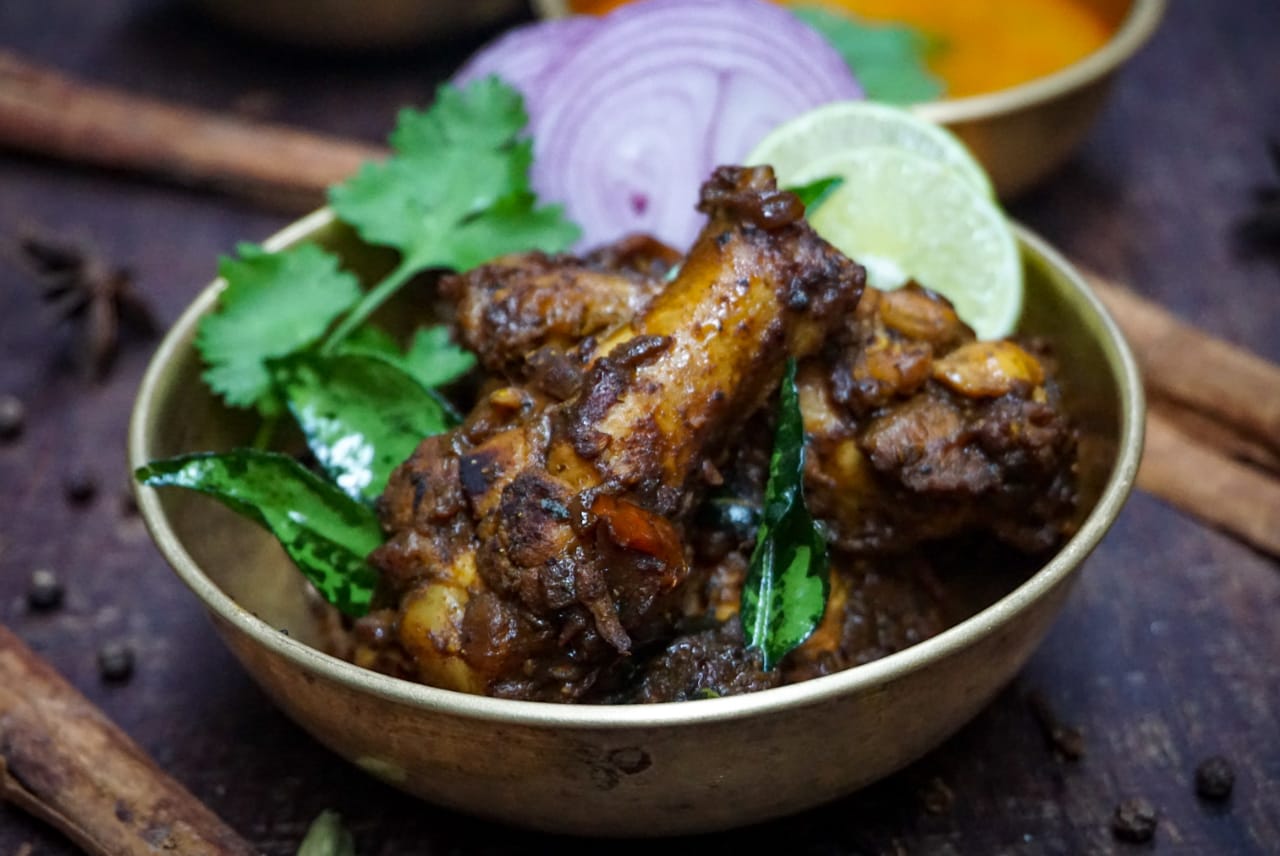
The Nattu Kozhi Roast by Chef Dayanand Ramakrishnan is a simple chicken recipe that can be prepared in a jiffy without any fancy ingredients. The recipe is crafted with the perfect medley of Indian spices. Nevertheless, this particular recipe is bang on restaurant style with its strong peppery taste. Therefore, it is sure to be a hit with those who like to savour the taste of traditional spicy non-vegetarian dishes.
The South Indian cuisine is distinguished by its generous use of fragrant spices and unique traditional cooking methods. This Nattu Kozhi recipe is simple, healthy, full-of-flavor, and rustic in style. It is a great side dish that does perfectly well with rice and sambar or rasam. Now the big question why is it called a roast when it is cooked in a kadai or pan and not in an oven? The answer is that the chicken, in its final stages of cooking, is left on the pan or kadai to blacken lightly which the local chefs call ‘roast’. Its a very popular chicken dish in South Indian restaurants.
What is Nattu Kozhi?
Nattu Kozhi, also called Country Chicken, refers to native or indigenous breeds of chicken raised in free-range farms. The Nattu Kozhi is known to be healthier and tastier for consumption as compared to mass-bred broiler chicken. This being said, the recipe comes out incredibly well with both varieties of chicken.
Nattu Kozhi Roast(Country Chicken Roast Recipe):
by Chef Dayanand Ramakrishnan

INGREDIENTS FOR NATTU KOZHI ROAST
Country Chicken- 200 gms
Oil- 2 tbs
Cumin Seeds- 1 tsp
Fennel Seeds- 1 tsp
Curry Leaves- 1 springs
Dried Red Chilli- 3 to 4 nos
Chopped Shallots- 100 gms
Ginger Garlic Paste- 2 tsp
Chilli Powder- 1 1/2 tsp
Coriander Powder- 1 tsp
Turmeric Powder- 1 tsp
Garam Masala Powder- 1 tsp
Pepper Powder- 2 tsp
Salt to taste
Fresh Coriander for garnishing
METHOD FOR PREPARING NATTU KOZHI ROAST
- Wash and clean the chicken. Then, coat it with a bit of Turmeric.
- Heat a pan/kadai with oil, temper the hot oil with Jeera and Fennel seeds, add in the Curry leaves, chopped Onions, Dried Red Chillies. Next, cook till the onions turn translucent.
- Add Ginger Garlic paste and fry.
- In the next step, add the chicken along with a little water and add in Red Chilli Powder, Coriander Powder, and Turmeric Powder.
- Allow the chicken to cook well in the masala; check for salt.
- Later, add the Garam Masala. Cook the chicken in the pan for a few more mins till the water dries up to resemble a roast. Add generous amounts of pepper powder, give a quick stir. After this step, remove the pan from the heat.
- Garnish with Coriander leaves and serve with Rice/Sambar
Read More from the Author: Spicy Chettinad Style Prawn Masala | Chettinad Eral Sukka Recipe

Frequently Asked Questions
1. What is Nattu Kozhi?
Nattu Kozhi refers to native, country-bred Indian chickens that are naturally raised in open, free-range environments. These chickens grow slowly, develop firmer meat, and are prized in South Indian cooking for their rich flavour and nutritional value.
2. What is Nattu Kozhi called in English?
All the English-related search variations—what is nattu kozhi in English, nattu kozhi meaning in English, nattu kozhi English name, nattu kozhi English word—point to the same answer:
Nattu Kozhi = Country Chicken
Other acceptable English terms:
-
Native Chicken
-
Free-Range Chicken (contextual)
-
Indigenous Chicken
3. What is Nadan Kozhi in English? Is it the same as Nattu Kozhi?
Yes, Nadan Kozhi (Malayalam) and Nattu Kozhi (Tamil) both translate to Country Chicken in English.
They refer to local, naturally raised Indian chicken breeds used in traditional recipes.
4. What is the difference between Nattu Kozhi and Broiler Chicken?
Nattu Kozhi
- Leaner, firmer meat
- Naturally grown, free-range
- Higher protein density
- Rich, authentic flavour
- Lower fat content
Broiler Chicken
- Soft, tender meat
- Mass-produced
- Faster growth cycle
- Higher fat and water content
Because of these differences, Nattu Kozhi dishes taste more flavourful and traditional.
5. Is Nattu Kozhi healthier?
Many families consider Nattu Kozhi healthier because:
- It is naturally raised
- Lower in fat
- Higher protein content
- Fewer chemicals or antibiotics
- Easier to digest when made into soup or curry
It’s often recommended for children, elderly people, and during recovery.
6. Can I substitute broiler chicken in Nattu Kozhi recipes?
Yes, but the taste and texture will be different.
For stronger flavour similar to Nattu Kozhi, slow-cooking or pressure-cooking helps intensify the taste.
7. Why does Nattu Kozhi taste different?
Because native chickens:
- Move more
- Grow naturally
- Develop firm muscle
- Retain natural oils and aromas
This gives Nattu Kozhi dishes a deep, earthy, traditional flavour that broiler chicken cannot match.
8. Is Nattu Kozhi the same as Free-Range Chicken?
They overlap but are not identical.
-
Nattu Kozhi: Local Indian breeds.
-
Free-range chicken: Any chicken raised with outdoor access.
Most Nattu Kozhi qualify as free-range, but not all free-range chicken are native breeds.
9. Why is Nattu Kozhi more expensive?
Because it takes longer to grow and is raised naturally.
Other factors include:
- High local demand
- Limited supply
- Better flavour profile
Prices may be 30% to 70% higher depending on region.
10. What are the most common regional names for Nattu Kozhi?
- Tamil: Nattu Kozhi
- Malayalam: Nadan Kozhi
- English: Country Chicken
- Hindi (contextual): Desi Murga
All refer to native Indian chicken breeds.