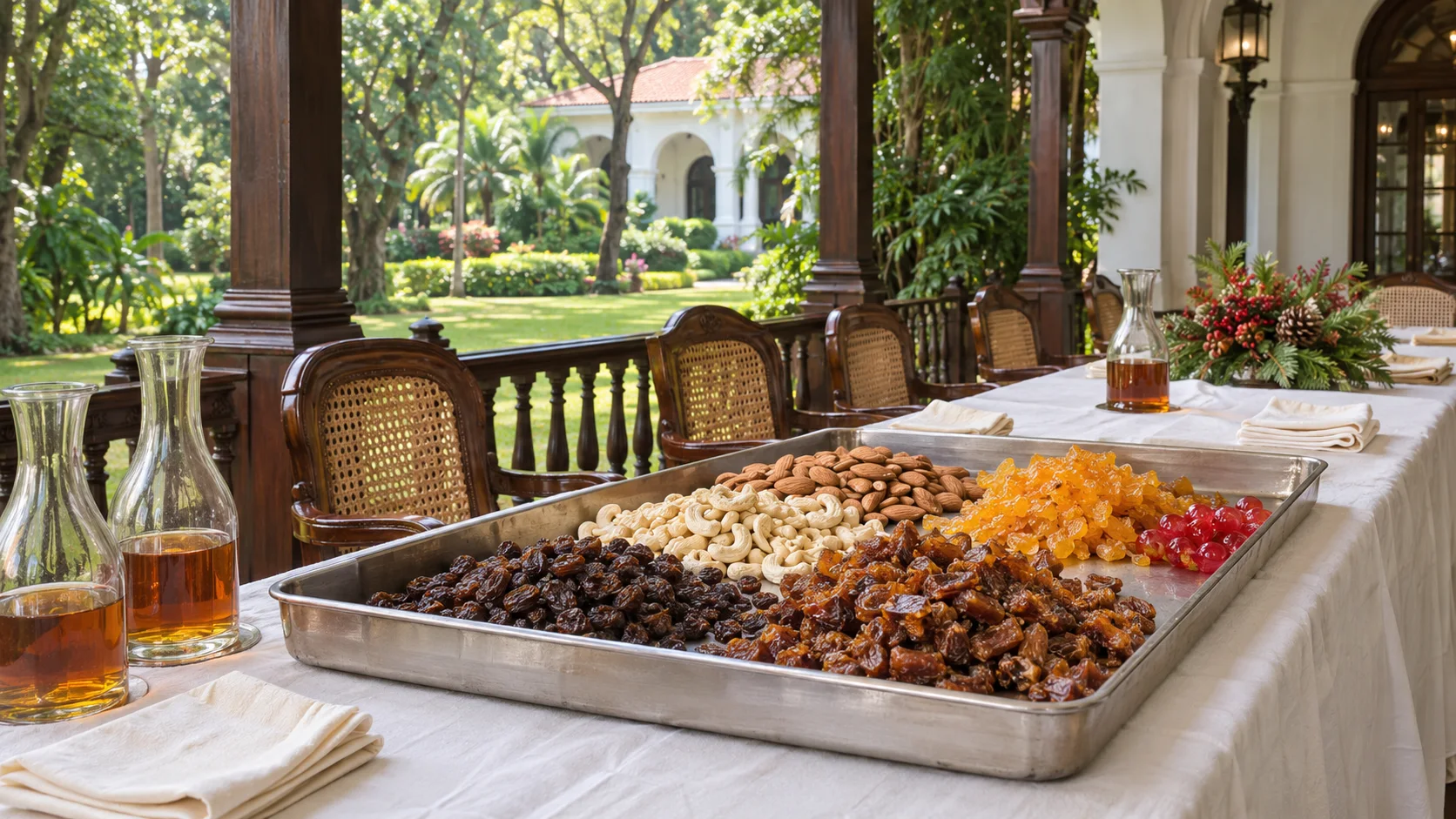
The cake mixing ceremony, in which dried fruit, nuts and spices are mixed and soaked weeks before the Christmas cake is baked, is a pre-Christmas custom that takes different forms around the world. In Britain, on the last Sunday before Advent, families gather in their kitchens to stir the Christmas pudding, each person taking a turn with the wooden spoon and making a wish as they do so.
In the Caribbean, the preparations begin even earlier. Raisins, currants and prunes are left to soak in rum for months, and in some homes for a full year, before they go into the black cake that is served at Christmas.
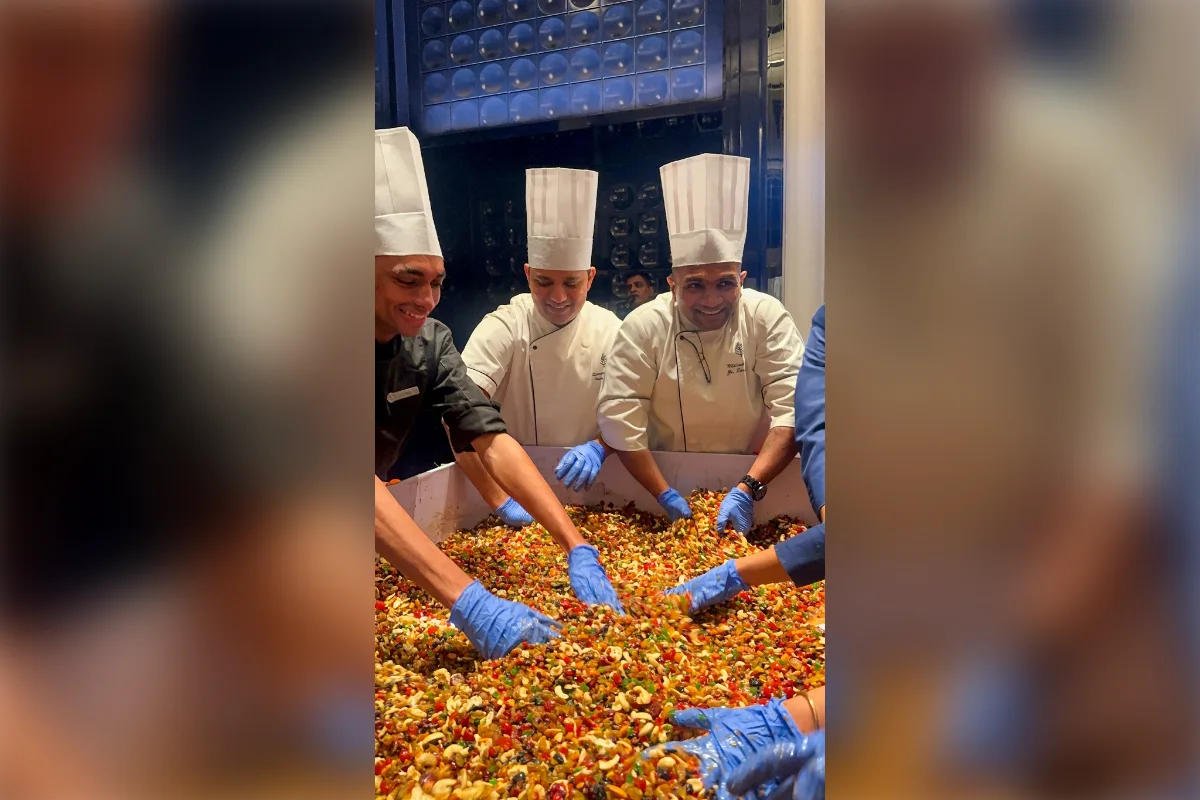
In India, the custom is arguably at its most festive. On hotel lawns and in banquet halls across the country, guests put on aprons and chef’s hats, stand around long tables heaped with dried fruit and nuts, and mix it all by hand while the chefs pour in the spirits. The tradition arrived with the British, settled into Indian homes and has since grown into one of the most anticipated events on the hospitality calendar.
In the eleven years that I have been writing about hotels, it is the event that has marked the start of the festive season. This guide explains what the ceremony is, where it came from, how the rest of the world observes it and how India’s hotels celebrated it in 2026.
What is a cake mixing ceremony?
A cake mixing ceremony is the communal first step in making a traditional Christmas fruit cake. Dried fruits, nuts, candied peel and spices are mixed by hand, soaked in spirits or fruit juice, and left to mature for weeks before baking.
At home, it is usually a quiet family task carried out in the kitchen, whereas hotels have turned it into a social occasion in which chefs stand shoulder to shoulder with guests and their children, and the afternoon usually ends with music, tea and a great many photographs.
“For me, the cake mixing ceremony is one of those occasions that makes the season feel real,” says Nitesh Gandhi, General Manager of Four Seasons Hotel Mumbai, where guests joined the chefs at the table this season. What he values, he adds, is “bringing people together around a table, sharing a tradition and looking forward to the celebrations ahead.”
Is cake mixing only an Indian tradition?
No. The custom of preparing Christmas fruit weeks in advance is shared across much of the world, although what sets India apart is the scale, since the practice has grown here from a family habit into a grand hotel event.
A look at how other countries observe it helps to explain how the Indian version came about.
Britain: Stir-up Sunday
The custom has its roots in Britain, where Stir-up Sunday is observed on the last Sunday before Advent, which in 2026 falls on 22 November. On that day, families take turns to stir the Christmas pudding, traditionally from east to west in honour of the Three Wise Men.
The name comes from a church prayer for that day, which opens with the words “Stir up”. The occasion remains a domestic one to this day, observed at home with the family.
The Caribbean: black cake
The longest preparation is found in the Caribbean, where black cake is the Christmas cake of Jamaica, Trinidad and Tobago, and Guyana, and its fruit is steeped in rum and wine for months, sometimes for as long as a year.
Its origins are similar to those of the Indian cake, as black cake grew out of the plum pudding that British colonists carried abroad, which was then remade with local rum to suit local tastes.
Sri Lanka, the Maldives and the Gulf: the hotel version
Hotel ceremonies are not confined to India either. In Colombo, ITC Ratnadipa held its third cake mixing on 30 October 2026, and Courtyard by Marriott Colombo held one on 22 October. Resorts in the Maldives host theirs every year, and hotels in Dubai and Abu Dhabi invite the public to join in from late October.
Most of these hotel ceremonies take place in countries around the Indian Ocean, and India is where the custom is most widespread.
Where did cake mixing begin?
Most accounts trace the custom to seventeenth-century Europe, when households gathered after the harvest to prepare fruit and nuts for their Christmas baking, although the details are hazy and the dates vary from one telling to the next.
The history of the cake itself is better documented. It began in medieval England as plum porridge, a thick, fruit-laden dish eaten on Christmas Eve after the Advent fast. Around the sixteenth century, the oats gave way to flour, butter and eggs, and the porridge slowly became a cake.
Why is it called plum cake when it has no plums?
Because “plum” once meant raisin. In older English, the word covered dried fruits such as raisins and currants, and the name outlived the meaning. A plum cake is simply a rich fruit cake.
How did cake mixing come to India?
Fruit cake came to India with the British during the colonial period, and the habit of preparing it travelled with it. The best-known account of how it took hold comes from Kerala.
A few days before Christmas in 1883, as the Mambally family tells it, a British planter from the Brown family of the nearby Anjarakandy cinnamon estate walked into a small bakery in the port town of Thalassery. He was carrying a plum cake from England, and he had a question for the owner. Could he make one just like it?
The baker, Mambally Bapu, took up the request. The planter had suggested a French brandy for the recipe, but Bapu chose a local brew made from cashew apple and banana instead, and his customer liked the result enough to order a dozen more. Bapu is widely credited with baking India’s first Christmas cake.
So the Indian Christmas cake was a local adaptation from the very beginning.
The mixing ritual followed a similar path, settling into Christian homes as a family custom before Christmas. One Kerala account dates the first hotel and bakery ceremonies there to after 1930, and notes they were once reserved for the British and the well-to-do. Today, the ceremonies are open to anyone who wishes to take part.
That long inheritance is easy to feel at Taj West End, Bengaluru, a hotel that dates back to 1887. Its General Manager, Taronish Karkaria, calls the ceremony “a celebration of heritage, craftsmanship, and the enduring spirit of the season.” The hotel was among the first to mix this year, gathering guests in its gardens in October.
When is cake mixing done, and why so early?
Most hotels in India hold their ceremonies between mid-October and late November. The timing is practical, as soaked fruit needs weeks to mature before it is baked for Christmas.
The longer the fruit rests, the more liquid it absorbs and the deeper the flavour of the finished cake. One Kerala account describes fruit resting for seven to eight weeks.
“There is something truly special about preparing for Christmas long before it arrives,” says Biswajit Chakraborty, General Manager of Four Seasons Hotel Bengaluru, “with every ingredient adding its own flavour to the celebrations ahead.” His hotel has already held its annual ceremony, and the fruit is now resting.
What goes into a cake mixing?
The base is dried fruit, nuts, candied peel and warm spices. Raisins, dates, figs and cherries are common, along with cashews and almonds, cinnamon, nutmeg, cloves and dried ginger.
Recipes differ mainly in the soaking liquid. Many kitchens use rum, brandy or wine, while fruit juice works for those who prefer a cake without alcohol, though home bakers usually keep a juice soak much shorter.
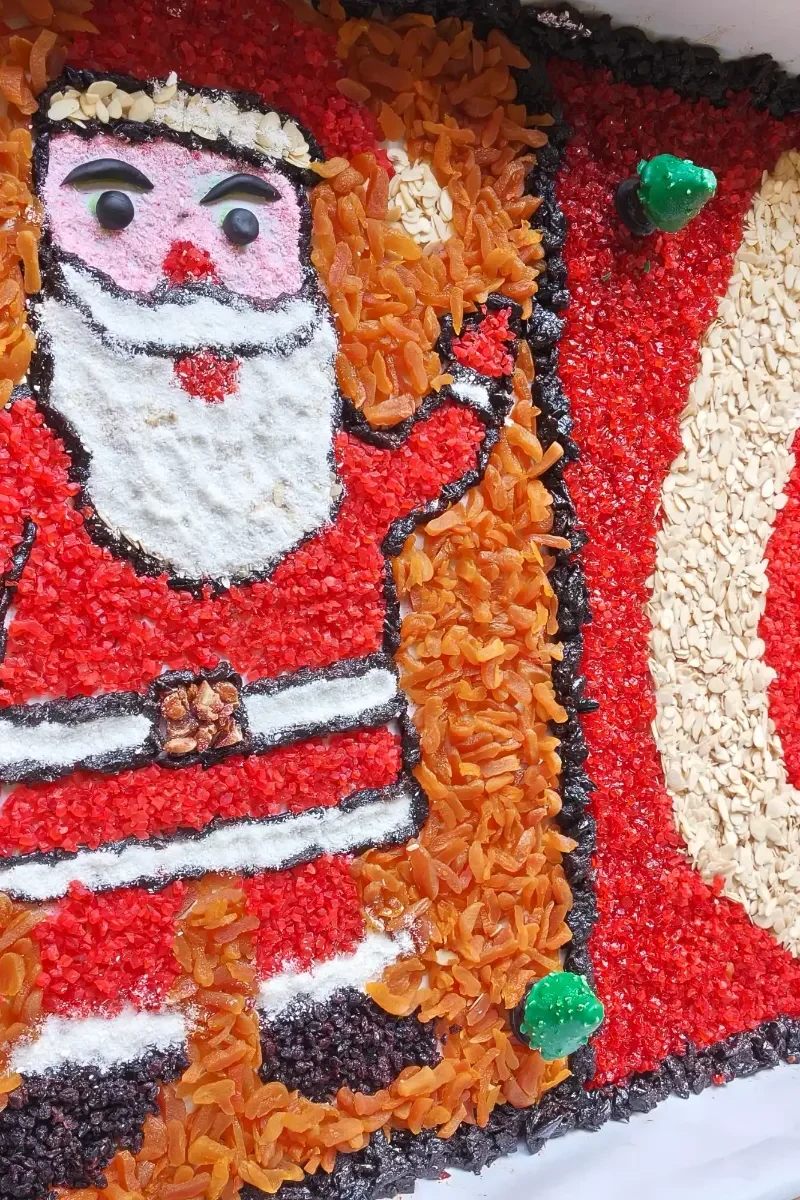
For Younis Khan, Hotel Manager of The LaLiT Ashok, Bengaluru, the ceremony is about “shared moments, festive flavours and the joy of creating something special for the season ahead.” At his hotel’s mixing, held on 13 November 2026 at its outdoor venue, Alfresco, berries and candied peel joined the fruit and nuts. The mix is destined for traditional Christmas plum cakes.
Hotels that held cake mixing ceremonies in 2026
- Taj West End, Bengaluru: October 2026, in the hotel’s gardens
- Four Seasons Hotel Bengaluru: early November 2026
- Four Seasons Hotel Mumbai: November 2026
- Taj Bangalore: 14 November 2026, with a children’s corner and grape stomping
- The LaLiT Ashok, Bengaluru: 13 November 2026, at Alfresco, followed by high tea
- Planet Hollywood Beach Resort Goa: November 2026, on the Beach Lawn at sunset
Why the ritual endures
When the people who run these hotels explain why the ceremony continues, they tend to speak less about the cake than about the people who gather to make it.
“It is heartening,” says Mohit Gurnani, General Manager of Taj Bangalore, “to see families, friends and well-wishers come together to celebrate the spirit of the season.” His hotel, opposite Kempegowda International Airport, turned its ceremony on 14 November 2026 into a family afternoon, with a children’s corner and a grape-stomping session.
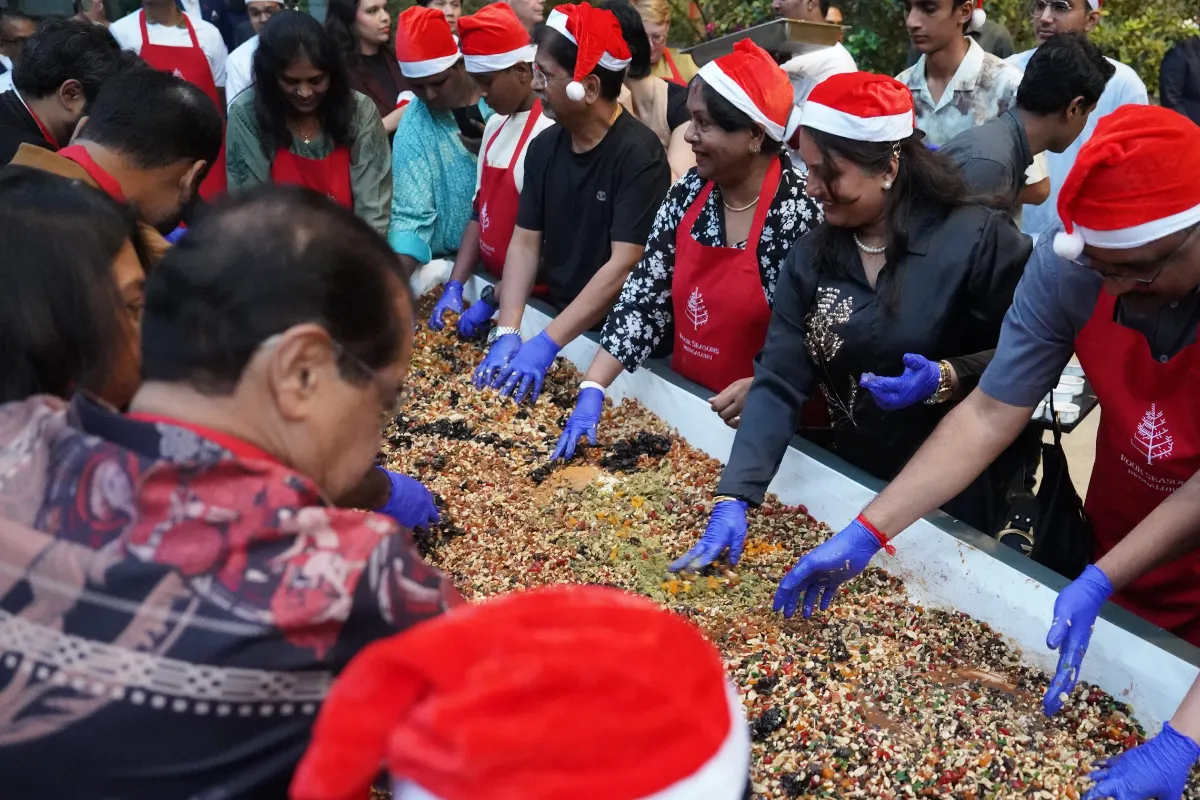
In Goa, Planet Hollywood Beach Resort took the mixing table outdoors to its Beach Lawn, where guests in Santa hats and aprons mixed the fruit as the sun set over the sea. “Meaningful experiences, shared moments and a sense of togetherness remain at the heart of every celebration,” says Anand Chatterjee, Executive Director, Planet Hotels and Resorts.
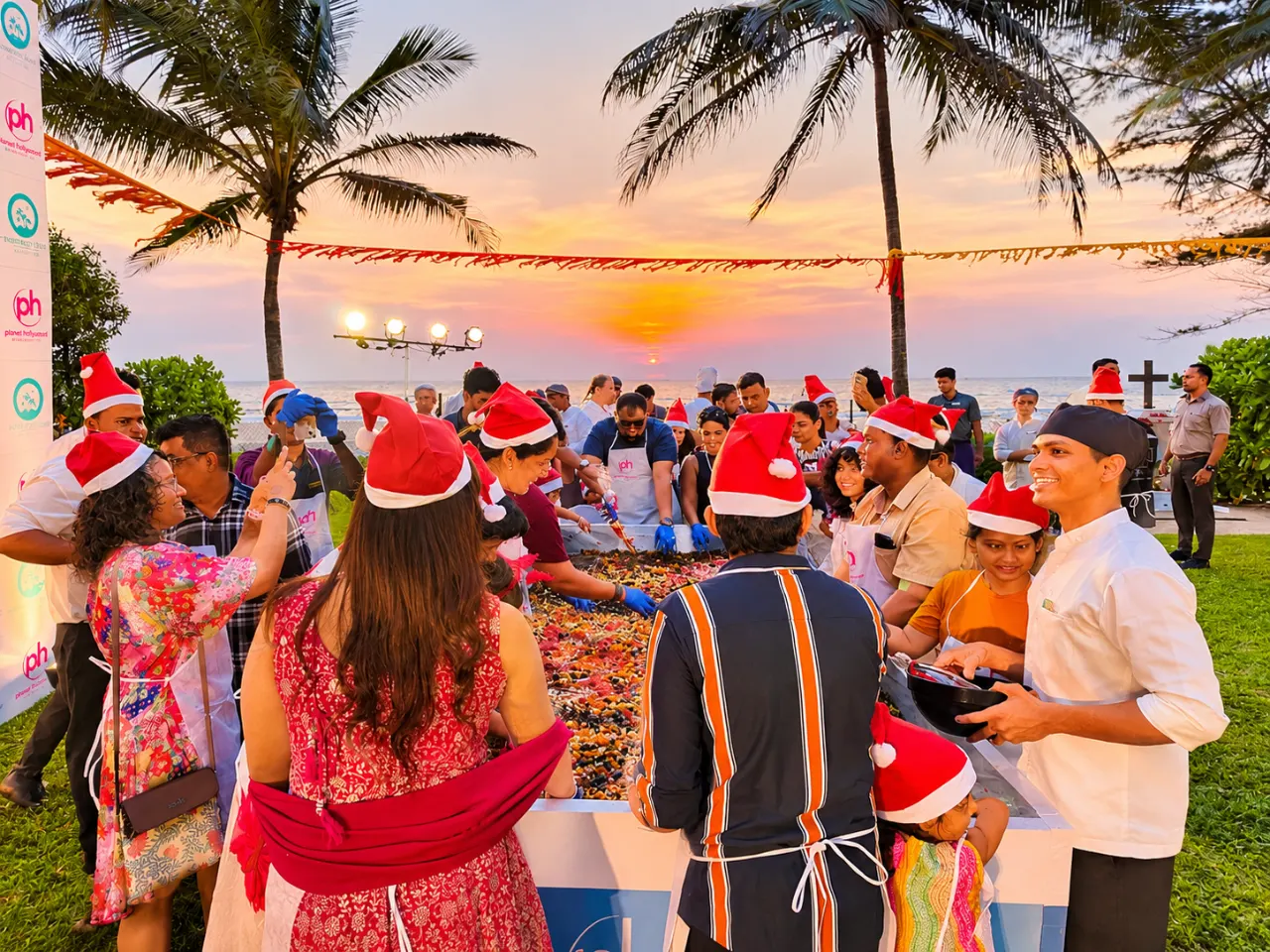
That may be why the custom has travelled so well, from a British kitchen to a Caribbean pantry to a hotel garden in Bengaluru. All it needs is a spoon, a pair of gloves and a little enthusiasm.
The fruit mixed this month will not be tasted until Christmas, and the wait is part of the tradition.
Frequently asked questions
What is a cake mixing ceremony?
It is the pre-Christmas ritual of mixing and soaking dried fruits, nuts and spices for the Christmas cake. In India, hotels host it as a festive event for guests.
Is cake mixing only done in India?
No. Britain has Stir-up Sunday, and the Caribbean soaks fruit for black cake. Hotels in Sri Lanka, the Maldives and the UAE also host cake mixing ceremonies. India is where the hotel version is grandest.
When is the cake mixing ceremony held?
In India, usually between mid-October and late November, several weeks before Christmas.
Can cake mixing be done without alcohol?
Yes. Fruit juice can replace spirits as the soaking liquid.
Why is Christmas cake called plum cake?
Because “plum” was once a word for raisins and other dried fruit.
Who baked India’s first Christmas cake?
Mambally Bapu of Thalassery, Kerala, is widely credited with baking it in 1883.
About The Daily Brunch
The Daily Brunch is one of India’s top luxury travel and hospitality publications. Since 2016, we have reported on luxury hotels, fine dining, chefs, wellness and travel, from cities and resorts across India to destinations around the world. Learn more about us.
Images courtesy of Four Seasons Hotel Mumbai, Four Seasons Hotel Bengaluru and Planet Hollywood Beach Resort Goa. Photograph of The LaLiT Ashok, Bengaluru: The Daily Brunch. Featured image for illustrative purposes only.

The Daily Brunch editorial team, led by co-founder Anju Anna Alex, has written about luxury hotels, restaurants, chefs and travel across India and beyond since 2016, with stories told through the people behind them.